Why Upholstery Holds Onto Smells Longer Than Any Other Surface in a Room
You clean the whole room. Floors are mopped, counters wiped down, air freshener sprayed. Everything smells fine, except that one chair or the couch in the corner still carries a faint odor no matter what you do. This isn't in your head. Upholstery genuinely holds onto smells longer than almost anything else in a room, and there's a real reason for it.
Fabric Has Far More Surface Area Than It Looks Like
A hard surface like a countertop or a tile floor is essentially flat. Odor particles land on top, and a simple wipe-down removes most of them. Upholstery fabric is completely different. Woven fibers create an enormous amount of surface area packed into a small space, giving odor-causing particles far more places to settle and cling to than a smooth surface ever could.
Odors Don't Just Sit on Top, They Get Absorbed
Fabric doesn't just collect particles on its surface the way hard materials do. Odor molecules actually work their way into the fibers themselves, and in many cases, into the cushioning and padding underneath. That's why a quick vacuum or surface wipe often isn't enough. The smell isn't just on the fabric, it's inside it.
Cushions Trap Odors Below the Surface
Most upholstered furniture has foam or fiber padding beneath the fabric, and that padding acts like a sponge for airborne particles. Smoke, pet odors, spilled food and drink, and general everyday use all work their way down into this layer over time. Even after the surface fabric is cleaned, odor can continue seeping back up from the padding underneath.
Upholstery Gets Cleaned Far Less Often Than Other Surfaces
Floors get vacuumed weekly. Counters get wiped daily. Upholstery, on the other hand, often goes months or longer between any real cleaning. That extended time between cleanings gives odors far more opportunity to set in and become harder to remove.
Heat and Humidity Make It Worse
Warm, humid conditions accelerate how deeply odor compounds bond to fabric fibers. This is part of why smoke smell, mildew odor, or pet smells seem to get more stubborn the longer they're left untreated, especially in rooms without much airflow.
Why Surface Cleaning Alone Doesn't Solve It
Wiping down upholstery or spraying a fabric freshener only addresses what's on the very top layer. To actually remove an odor from upholstery, the treatment needs to reach into the fabric and the padding underneath, not just mask what's on the surface.
What Actually Works
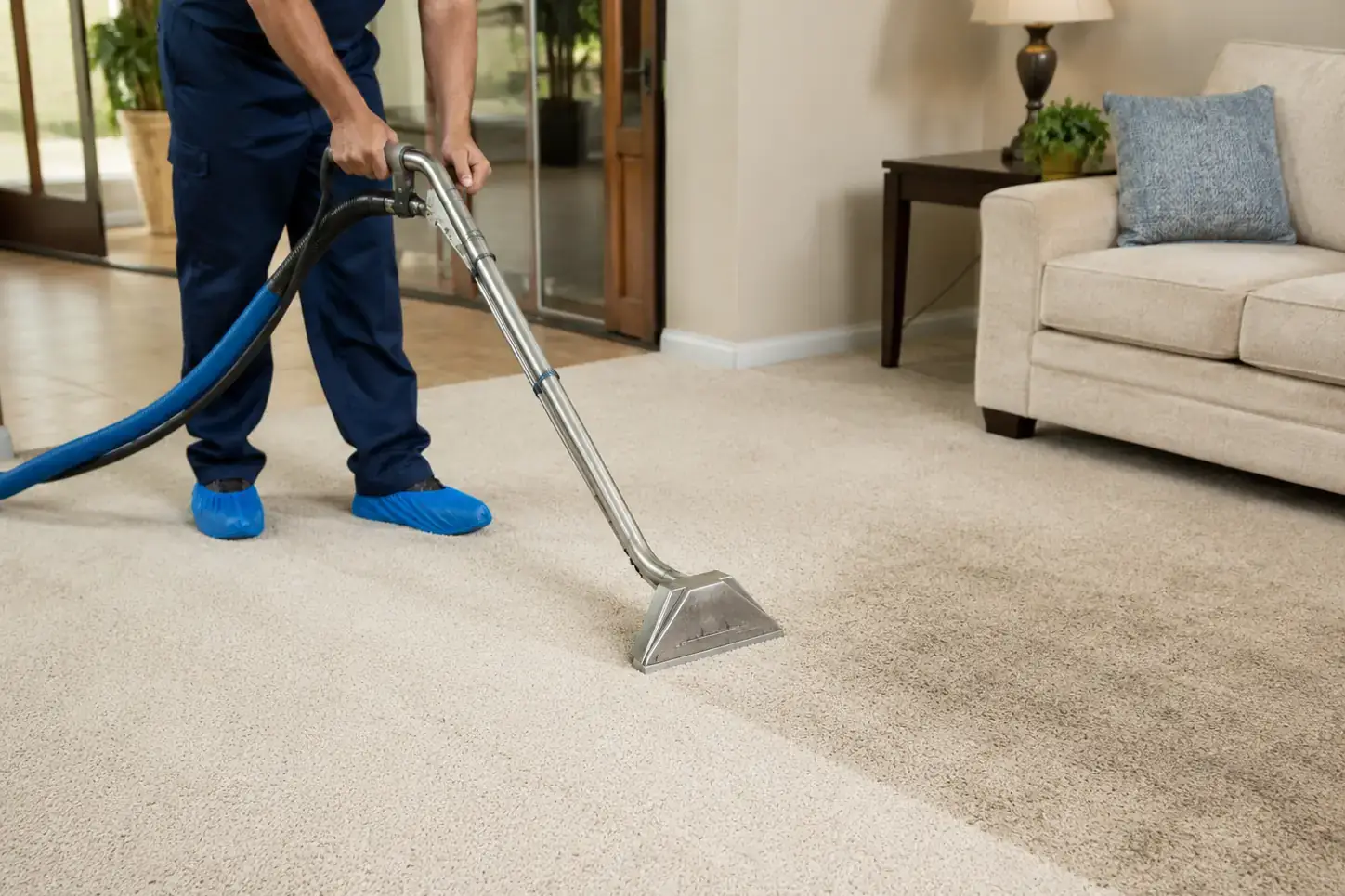
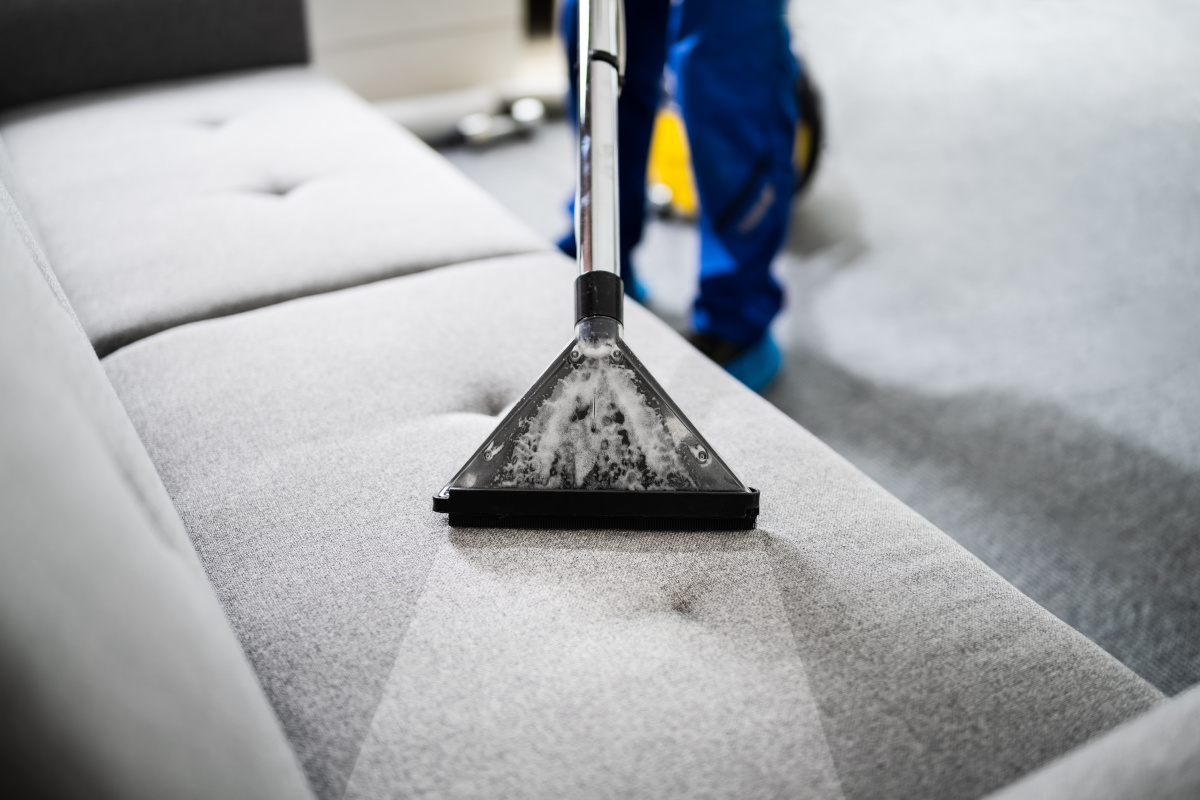
Professional upholstery cleaning uses hot water extraction to pull embedded particles and odor-causing compounds out of both the fabric and the cushioning below it. For more stubborn odors, treatments like enzyme-based cleaners or ozone and hydroxyl treatments can break down odor molecules at the source rather than covering them up. This is a very different process than a quick vacuum or a can of fabric spray, and it's why odors that seem impossible to get rid of on your own often clear up completely with the right professional treatment.
Our residential cleaning services include deep upholstery cleaning designed to reach beyond the surface. For homes or businesses dealing with smoke, water, or other odor sources affecting furniture and fabric throughout a space, our restoration services address the full scope of the problem, and our building maintenance team can help commercial spaces stay ahead of it with a regular upholstery care schedule.